

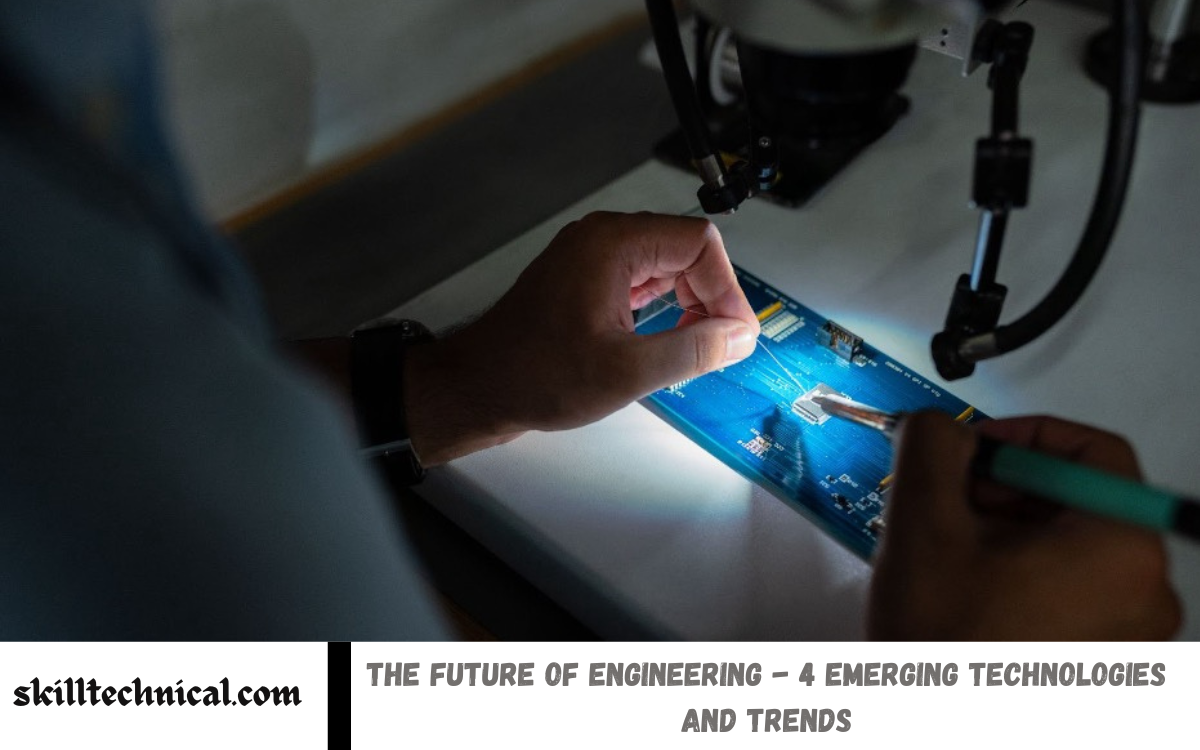
Engineering is evolving faster than ever with sustainable solutions. Reshaping the way we live and work in engineering is both exciting and transformative.
In this fast-paced world, engineers are no longer limited to traditional tools and methods. They are now embracing cutting-edge technologies that promise to redefine entire industries. Whether Artificial Intelligence enhances design accuracy, the Internet of Things (IoT) enables smarter infrastructure, or 3D printing revolutionizes manufacturing, these innovations are opening doors to possibilities once considered science fiction.
Understanding these trends is not just important—it’s essential. Staying updated on what’s next helps students, professionals, and businesses prepare for a world where adaptability and innovation will be key. In this article, we’ll explore four emerging technologies and trends shaping the future of engineering. From sustainable practices to advanced automation, these developments are setting the stage for a new era of engineering that’s more connected, efficient, and impactful than ever before.
Engineering at a Turning Point
Engineering today stands at a critical crossroads, shaped by rapid technological advancements, growing environmental challenges, and evolving human needs. This turning point is not just about adopting new tools—it’s about redefining the role of engineering in a changing world.
The Rise of Sustainable Engineering
Environmental concerns have shifted engineering priorities. There’s an increasing push toward green technologies, renewable energy, sustainable materials, and eco-friendly infrastructure. Engineers are now expected to create solutions that balance efficiency with environmental impact.
Digital Transformation and Automation
Technologies like artificial intelligence, machine learning, the Internet of Things (IoT), and robotics are reshaping the engineering landscape. From smart factories to predictive maintenance, engineers must now integrate digital systems with traditional practices.
Interdisciplinary Collaboration
Modern engineering problems are complex and require a blend of disciplines. Mechanical, software, electrical, and civil engineers now often work together, supported by data scientists and designers, to build comprehensive and innovative solutions.
Focus on Human-Centered Design
Engineering is moving beyond functionality to prioritize user experience, safety, and accessibility. Whether designing consumer products or urban infrastructure, engineers are expected to consider the social impact of their work.
Global Challenges Demand Innovative Solutions
Climate change, urbanization, cybersecurity, and public health are pressing global issues. Engineers are being called upon to develop resilient systems—like climate-adaptive buildings or digital healthcare platforms—that can withstand these challenges.
The Skills Gap and Lifelong Learning
As technology evolves, so must the engineers. The future demands not only technical proficiency but also soft skills like critical thinking, communication, and adaptability. Lifelong learning is now a key part of an engineer’s career.
Ethics and Responsibility
With great power comes great responsibility. Ethical considerations—such as data privacy, algorithm bias, and design environmental footprint—are becoming central to engineering education and practice.
Engineering is no longer just about building things—it’s about creating a better future. As we stand at this turning point, the profession must evolve to meet the needs of a fast-changing, interconnected, and sustainability-focused world. Those who adapt and innovate will shape the path forward.
Artificial Intelligence and Machine Learning in Engineering
Artificial Intelligence (AI) and Machine Learning (ML) are revolutionizing engineering. These technologies help machines learn from data, make decisions, and improve over time without being explicitly programmed. In engineering, this means smarter systems, faster designs, and better decision-making across various fields like civil, mechanical, electrical, and computer engineering.
By integrating AI and ML into engineering processes, companies can optimize resources, reduce errors, predict outcomes, and create more efficient, cost-effective solutions.
Key Headings for Your Article or Report
What is Artificial Intelligence in Engineering?
- Understanding the basics and its growing role in modern design and development.
How Machine Learning Supports Engineering Decisions
- Real-time predictions and smarter problem-solving using data.
Applications of AI and ML Across Engineering Disciplines
- From robotics to smart grids—where the technology is making a difference.
AI in Civil and Structural Engineering
- Predicting structural failures, optimizing designs, and improving safety.
ML in Mechanical and Manufacturing Engineering
- Enhancing automation, predictive maintenance, and quality control.
AI for Electrical and Electronics Engineers
- Innovative circuits, signal processing, and power systems.
Role of AI in Computer and Software Engineering
- Algorithm optimization, automated testing, and intelligent code generation.
Benefits of Using AI and ML in Engineering
- Increased efficiency, reduced costs, and faster innovation.
Challenges in Implementing AI and ML in Engineering
- Data quality, model accuracy, and integration into legacy systems.
The Future of Engineering with AI and Machine Learning
- What’s next? Trends shaping the next decade of engineering innovation.
Let me know if you’d like an entire article, a presentation, or examples of real-world case studies in this area!
Sustainable and Green Engineering Technologies
Sustainable and green engineering technologies are at the forefront of addressing environmental challenges and promoting long-term ecological balance. These technologies focus on minimizing negative environmental impacts while maximizing resource efficiency and sustainability. Here’s a comprehensive look into this vital field:
What is Green Engineering?
Green engineering involves designing products, processes, and systems that minimize pollution, reduce energy and material usage, and promote.
Core Principles of Sustainable Engineering
- Waste Prevention: Designing processes that generate minimal waste.
- Energy Efficiency: Optimizing energy use through innovative design and renewable sources.
- Life Cycle Thinking: Considering environmental impact from raw materials to disposal.
- Sustainable Resource Use: Utilizing renewable, recyclable, or biodegradable materials.
- Pollution Reduction: Lowering emissions and contaminants in air, water, and soil.
Key Green Technologies in Engineering
- Renewable Energy Systems
Technologies like solar panels, wind turbines, hydroelectric systems, and bioenergy reduce dependence on fossil fuels.
- Green Building Technologies
Includes innovative HVAC systems, energy-efficient lighting, sustainable insulation, green roofs, and materials like bamboo or recycled steel.
- Water Conservation Systems
Techniques like rainwater harvesting, greywater recycling, and low-flow fixtures help reduce water consumption.
- Sustainable Transportation
Electric vehicles (EVs), hydrogen fuel cells, and intelligent transportation systems reduce emissions and improve efficiency.
- Waste-to-Energy Technologies
Innovative systems that convert organic waste into usable energy, reducing landfill use and generating power.
- Carbon Capture and Storage (CCS)
Capturing CO₂ emissions from industrial processes and storing them underground to combat climate change.
Role of Digital Technologies
IoT (Internet of Things), AI, and big data are increasingly being used to monitor and optimize energy use, water consumption, and pollution control in real time.
Benefits of Sustainable and Green Engineering
- Reduces environmental footprint
- Lowers operational and energy costs
- Promotes healthier living conditions
- Supports compliance with environmental regulations
- Enhances brand image and market value
Challenges in Implementation
- High initial costs
- Technological complexity
- Regulatory hurdles
- Need for skilled workforce and education
Future Outlook
The future of sustainable engineering lies in integrating circular economy models, advancing renewable energy storage, and promoting climate-resilient infrastructure globally.
Engineering is not just a trend—it’s a necessity. By focusing on long-term environmental health, these technologies play a critical role in shaping a cleaner, more responsible, and energy-efficient world.
Advanced Materials and Nanotechnology
Advanced materials refer to substances engineered to exhibit superior properties or functionalities compared to conventional materials. These materials are designed to improve performance in specific applications, such as greater strength, lighter weight, enhanced electrical conductivity, or improved thermal stability. They play a crucial role in various industries, including aerospace, automotive, electronics, healthcare, and energy.
Examples of advanced materials include composites, biomaterials, innovative materials, and ceramics. These materials often combine different components at the molecular or atomic level to create structures with unique characteristics that meet the demands of cutting-edge technology.
Typically between 1 and 100 nanometers, nanotechnology enables the design and fabrication of materials and devices with unprecedented precision. At this scale, materials often exhibit distinct physical, chemical, and biological properties that differ significantly from their bulk counterparts.
Read Also: New Technology Trends for 2025
Why do Engineers of the Future Need More Than Just Technical Knowledge?
Certainly! Here’s a detailed explanation of why engineers of the future need more than just technical knowledge:
Why Engineers of the Future Need More Than Just Technical Knowledge
The role of engineers extends far beyond traditional technical skills. While a strong foundation in science, technology, engineering, and mathematics (STEM) remains essential, the future demands engineers to possess a broader skill set that includes soft skills, adaptability, and a deep understanding of societal impacts.
Complex Problem-Solving Requires Interdisciplinary Thinking
Modern engineering challenges are rarely isolated within one discipline. Whether designing sustainable infrastructure, developing innovative technologies, or creating advanced healthcare devices, engineers must integrate knowledge from various fields. This interdisciplinary approach calls for creativity, critical thinking, and the ability to collaborate with professionals from diverse backgrounds.
Communication and Collaboration are Crucial
Engineers often work in teams that include non-engineers, such as marketers, project managers, clients, and policymakers. It is vital for engineers to clearly communicate technical concepts. Strong interpersonal skills help engineers build consensus, lead projects effectively, and contribute to a productive workplace culture.
Ethical and Social Responsibility
As technology increasingly influences daily life, engineers must consider the ethical implications of their work. This includes understanding privacy issues, environmental impact, and societal consequences of new inventions. Engineers who think ethically help ensure technology benefits society and mitigates harm.
Adaptability to Rapid Technological Change
Technology evolves at an unprecedented pace. Engineers must be lifelong learners who can quickly adapt to new tools, programming languages, materials, and industry standards.
Business Acumen and Project Management Skills
Understanding the economic and business aspects of engineering projects enhances decision-making and resource management. Engineers with knowledge of budgeting, timelines, and client requirements can deliver solutions that are not only technically sound but also commercially viable.
Global Perspective and Cultural Awareness
Sensitivity to different cultures, regulations, and market needs enables engineers to design solutions that work worldwide. A global mindset fosters better collaboration and innovation.
While technical expertise forms the backbone of engineering, technical skills with communication, ethical judgment, adaptability, and business insight., This holistic approach prepares engineers to tackle complex challenges and create meaningful impact in a dynamic world.
Frequently Asked Questions
How will these technologies impact job opportunities in engineering?
While automation might change some roles, emerging technologies create new opportunities requiring skills in AI, data analytics, robotics, and digital manufacturing. Continuous learning will be essential.
What industries will benefit the most from these engineering trends?
Industries such as aerospace, automotive, healthcare, construction, and energy are already seeing major benefits from improved efficiency, safety, and innovation.
Are there any challenges associated with adopting these new technologies?
Yes, challenges include high initial costs, cybersecurity risks, the need for specialized skills, and managing change within organizations.
How can engineers prepare for the future with these emerging technologies?
Engineers should focus on continuous education, develop interdisciplinary skills, embrace digital tools, and stay updated on industry trends and best practices.
What is the overall outlook for the future of engineering?
The future is promising, with technology driving more brilliant, more sustainable, and innovative engineering solutions. Engineers who adapt and innovate will play a key role in shaping tomorrow’s world.
Conclusion
The future of engineering is bright and dynamic; we design, build, and interact with the world around us. From artificial intelligence and robotics to sustainable materials and innovative infrastructure, these emerging trends are opening new possibilities for innovation, efficiency, and sustainability. Engineers today are not only problem solvers but also visionaries who leverage cutting-edge tools to tackle complex challenges—from climate change to urbanization.