

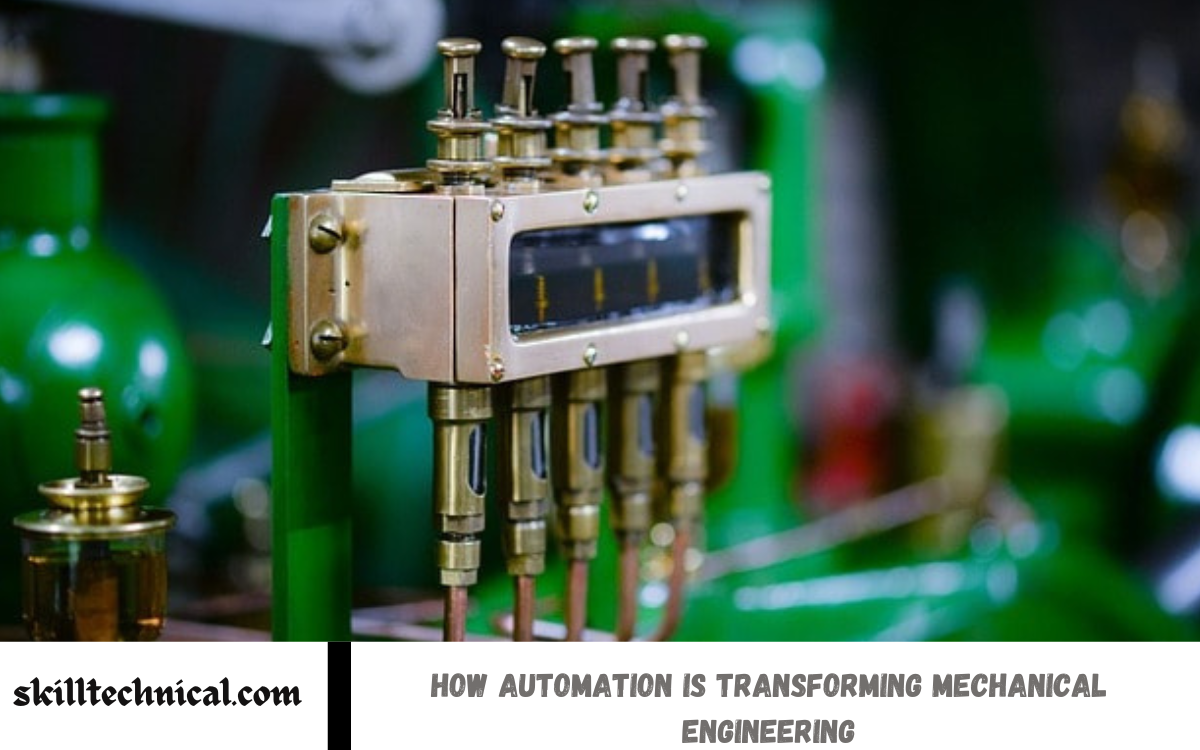
Automation is revolutionizing the field of mechanical engineering, driving innovation and efficiency like never before. By integrating advanced technologies like robotics, AI, and the IoT, automation is reshaping design, production, and maintenance processes in mechanical systems. This transformation is not only streamlining operations but also improving precision, reducing human error, and enhancing overall productivity.
In design, automation allows engineers to create and simulate complex mechanical systems with incredible speed and accuracy. 3D modeling and simulation tools enable quicker iterations and more efficient problem-solving. On the production floor, automated machines and robots are taking over repetitive, labor-intensive tasks, which improves consistency and reduces costs. Automation also plays a key role in predictive maintenance, using sensors and data analytics to detect issues before they become serious problems, thus minimizing downtime and repair costs.
As automation continues to evolve, mechanical engineers are focusing more on integrating these technologies into existing systems, making processes more intelligent and more adaptable. The shift towards automation is not just transforming how things are made but also expanding the possibilities for what can be created, ultimately pushing the boundaries of mechanical engineering.
The Rise of Automation in Mechanical Engineering: A Game Changer
The integration of automation into mechanical engineering is transforming the industry, unlocking new levels of efficiency, precision, and innovation. In recent years, automation has advanced beyond simple machinery control, leading to the creation of intelligent systems that can design, produce, and maintain mechanical systems with minimal human intervention. This shift is a game changer for mechanical engineering, drastically improving processes that were once labor-intensive and error-prone.
At the core of this transformation is the adoption of technologies like robotics, artificial intelligence (AI), and the Internet of Things (IoT). Tasks in manufacturing, such as assembly and material handling, allow engineers to focus on higher-level problem-solving and design innovation. AI is helping to automate complex design processes, using algorithms to optimize performance and predict outcomes with greater accuracy. Meanwhile, IoT-enabled devices are creating interconnected systems that provide real-time data, enabling engineers to monitor and fine-tune mechanical systems for better performance.
Automation is also reshaping maintenance practices. Predictive maintenance, powered by sensors and data analytics, can now identify potential failures before they occur, saving both time and money. This ability to foresee problems is revolutionizing how mechanical engineers approach system upkeep, leading to longer-lasting and more reliable products.
How Robotics is Redefining Mechanical Manufacturing Processes
Robotics has become a cornerstone in modern mechanical manufacturing, dramatically changing how products are designed, built, and assembled. The rise of robotic systems in manufacturing processes is not just enhancing efficiency but also pushing the boundaries of what’s possible in terms of precision, scalability, and flexibility.
Traditionally, mechanical manufacturing involved a lot of manual labor for tasks like assembly, material handling, and quality control. However, robots are now taking over these repetitive and physically demanding tasks. With the ability to work continuously without fatigue, robots improve productivity and reduce human error, ensuring that products are made with greater consistency and precision. In turn, this helps reduce defects and waste, leading to cost savings for manufacturers.
One of the most significant advantages of robotic systems is their ability to perform complex tasks with high accuracy. Robots equipped with advanced sensors and AI algorithms can handle delicate operations, such as intricate part assembly or precise welding, that were once challenging for human workers. Robotics offers unmatched flexibility, as robots can easily be reprogrammed and adapted for different tasks or production runs, providing manufacturers with agility and the ability to scale production rapidly.
Read Also: The Role of Artificial Intelligence in Modern Engineering Practices
Leveraging Artificial Intelligence to Enhance Mechanical Design
Artificial Intelligence (AI) is increasingly becoming a powerful tool in mechanical design, offering engineers innovative solutions that enhance efficiency, creativity, and precision. By integrating AI into the design process, mechanical engineers can unlock new levels of optimization, automation, and accuracy, ultimately transforming how products are conceived, developed, and refined.
One key way AI enhances mechanical design is through generative design. This AI-driven approach allows engineers to input specific design parameters—such as material types, weight restrictions, and performance goals—and let the AI algorithm explore numerous design alternatives. The result is a range of innovative, highly optimized designs that would be difficult, if not impossible, for a human designer to generate manually. The final product is efficient, durable, and cost-effective.
AI also plays a crucial role in predictive modeling and simulation. Traditionally, engineers would need to manually test different designs, which could be time-consuming and expensive. With AI, engineers can simulate how a design will perform under various conditions, predicting stress points, material fatigue, and other factors before a prototype is even created. This leads to faster iterations and reduces the risk of costly mistakes in the manufacturing process.
Frequently Asked Questions
Can automation improve the accuracy of mechanical systems?
Yes, automation enhances the precision of mechanical systems. Robots and AI-driven processes can perform tasks such as assembly, welding, and machining with a high level of accuracy, which reduces defects and waste in the manufacturing process.
How does automation affect the workforce in mechanical engineering?
While automation may reduce the need for manual labor in specific tasks, it also creates demand for workers skilled in robotics, AI, and system integration. Mechanical engineers now need to adapt by learning how to design, program, and maintain automated systems.
What are the long-term benefits of automation in mechanical engineering?
Long-term benefits include cost reduction, increased production capacity, better quality control, faster time-to-market, and the ability to handle more complex and customized engineering projects. Automation also supports sustainable practices by minimizing waste and energy consumption.
How does the Internet of Things (IoT) contribute to automation in mechanical engineering?
IoT devices enable interconnected systems that provide real-time data, allowing engineers to monitor performance, optimize production processes, and maintain equipment more efficiently. IoT enhances the capabilities of automated systems by enabling better data-driven decisions.
Is automation making mechanical engineering more sustainable?
Yes, automation contributes to sustainability by optimizing material use, reducing energy consumption, and minimizing waste. Automated systems can create more efficient production processes, which are crucial in industries aiming for environmentally friendly practices.
Conclusion
Automation is undeniably reshaping the landscape of mechanical engineering, driving a profound shift in how products are designed, produced, and maintained. The industry is innovative by integrating advanced technologies like robotics, AI, and the IoT. From streamlining design processes with generative design and predictive modeling to enhancing manufacturing processes with robotic automation, automation is enabling mechanical engineers to push the boundaries of what’s possible.