

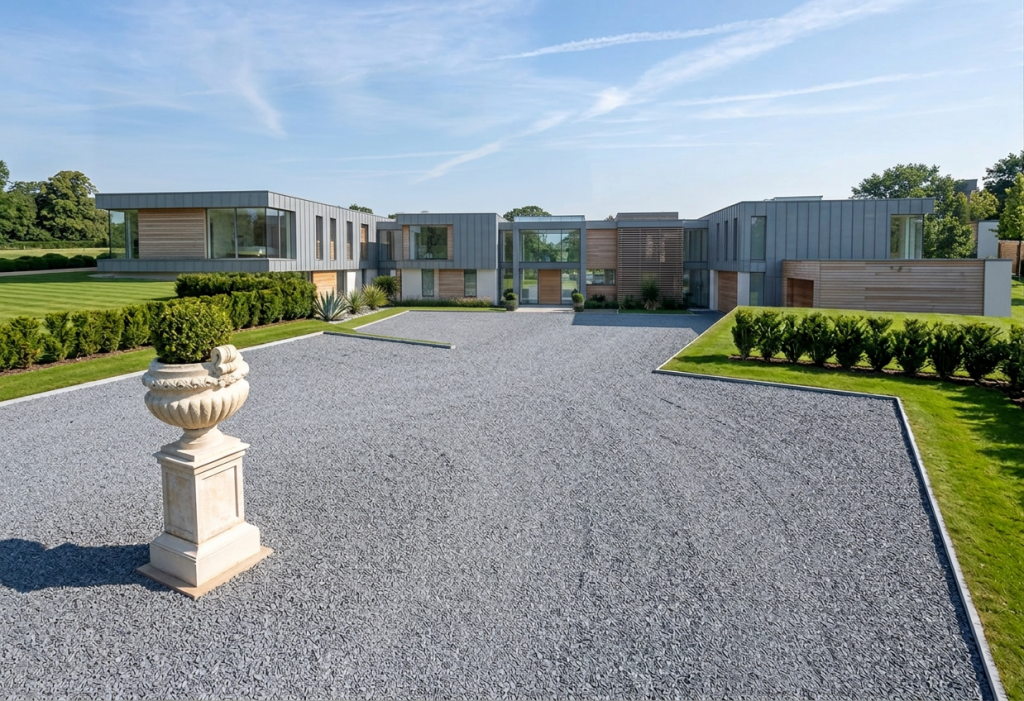
The best aggregate for a driveway is usually a hard-wearing angular gravel or crushed stone, typically around 10-20mm (0.4-0.8 in) in size, laid over a properly compacted sub-base. For most domestic driveways, angular gravel is better than rounded pea shingle because it locks together more effectively and is less likely to shift under tyres. That being said, there is no single “best” driveway aggregate for every property. The right choice depends on vehicle use, turning areas, the look you want, drainage requirements and the condition of the ground beneath it.
For homeowners, landscapers and trade customers comparing practical driveway materials, Mainland Aggregates supplies a wide range of construction and decorative aggregates suitable for sub-bases, gravel driveways and hard landscaping projects.
What should a good driveway aggregate do?
A good driveway aggregate should provide stability, drainage, durability and the right visual finish. It needs to cope with vehicle weight, resist rutting and remain manageable under regular use.
The most important qualities are:
- Angular shape, so the stones interlock
- Suitable size, usually not too small or too large
- Good drainage performance
- Resistance to crushing
- Compatibility with the sub-base
- A finish that suits the property
Driveway aggregate has to do more than look attractive. If the wrong material is used, it may scatter, sink, compact unevenly, stick in tyre treads or become uncomfortable to walk across.
Is gravel a good choice for a driveway?
Yes, gravel is one of the most practical and cost-effective choices for a driveway, especially when installed over the correct sub-base. It drains well, is relatively quick to install, suits both traditional and modern properties and can be refreshed more easily than many fixed surfaces.
Gravel can also help with planning and drainage. GOV.UK guidance on permeable surfacing explains that householders generally do not need planning permission for a new or replacement driveway if the surface is permeable, such as gravel, or if rainwater is directed to a lawn or border to drain naturally. The Planning Portal gives similar guidance for paving front gardens.
This does not mean gravel can be laid without preparation. A long-lasting gravel driveway still needs excavation, a compacted sub-base, edging and an appropriate depth of surface aggregate.
What size gravel is best for a driveway?
For most domestic driveways, 10-20mm (0.4-0.8 in) gravel is usually the best size range. It is large enough to avoid being easily displaced or trapped in tyre treads, but not so large that it becomes difficult to walk or drive over.
A 20mm (0.8 in) angular gravel is often a strong all-round choice. Smaller 10mm (0.4 in) gravel can look neater and may be easier underfoot, but it can move more readily on slopes or where cars turn frequently. Very large stones can feel unstable and are less comfortable for pedestrians, pushchairs, wheelie bins and bicycles.
Mainland Aggregates often recommends choosing the size based on the driveway’s use, not just appearance. A decorative front garden parking area may suit a smaller aggregate, while a busier driveway may need a more robust angular stone.

Is angular gravel better than rounded gravel?
Yes, angular gravel is usually better for driveways because it binds together more effectively. The sharper edges help the stones lock into place, which reduces movement under vehicle tyres.
Rounded gravel, such as pea shingle, can look attractive, but it behaves more like loose marbles. It is more likely to roll, spread and migrate onto pavements, lawns or the road, making it less suitable for driveways with turning areas, gradients or frequent vehicle use.
What is the best sub-base for a gravel driveway?
The best sub-base for a gravel driveway is usually MOT Type 1 or another suitable compactable aggregate. The sub-base is the structural layer beneath the decorative gravel, and it is what gives the driveway strength.
MOT Type 1 contains a mix of stone sizes and fine material that compacts into a firm, load-bearing layer. For a domestic driveway, a compacted depth of around 100-150mm (4-6 in) is often used, depending on ground conditions and expected vehicle load.
The surface gravel should not be expected to do all the structural work. If decorative aggregate is laid directly onto soft soil, it will quickly sink, spread and mix with the ground beneath.
Which aggregate looks best on a driveway?
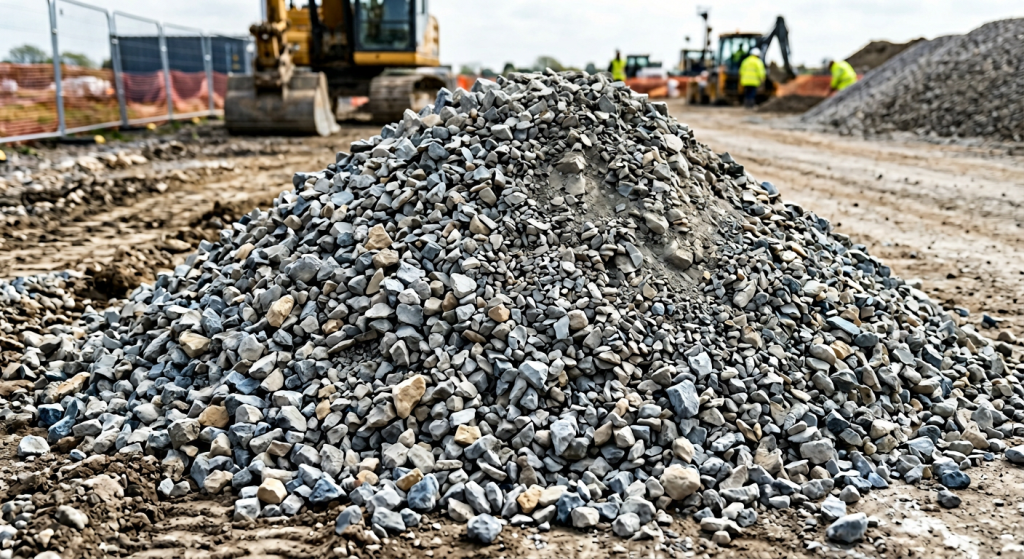
The best-looking aggregate depends on the property, but popular driveway choices include granite, limestone, flint, basalt and decorative chippings in neutral, grey, buff, cream or golden tones.
Traditional homes often suit warmer colours such as golden gravel or buff chippings. Modern properties often work well with grey granite, black basalt or clean limestone shades. Very pale aggregates can brighten a shaded entrance but may show dirt more easily, while darker aggregates can look sharp and contemporary.
Mainland Aggregates supplies a wide range of decorative aggregates, which makes it easier to match the driveway material to the property rather than choosing purely on price.
What driveway aggregate is best for drainage?
Gravel and angular stone are strong choices for drainage because water can pass through the gaps between particles, provided the driveway build-up beneath is also designed to drain properly.
This is particularly important for front gardens and urban driveways. Poorly drained hard surfaces can increase surface water runoff, which is why government guidance encourages permeable surfacing or directing rainwater to drain naturally within the property.
A gravel surface alone does not guarantee good drainage. The sub-base, soil, gradient, edging and any membranes all affect how water moves through the driveway. On clay soil or poorly draining ground, additional drainage design may be needed.
Should you use a gravel grid?
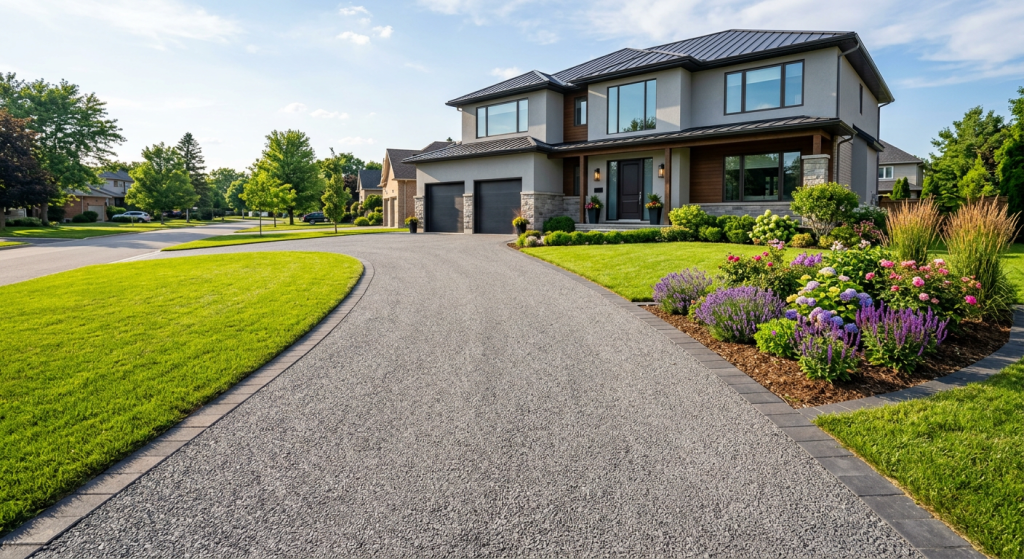
A gravel grid can be useful if the driveway is used frequently, has turning areas, sits on a slight slope or needs extra surface stability. Grids help hold the aggregate in place and reduce rutting, spreading and displacement.
They are not always essential, but they can make a gravel driveway easier to maintain. They are especially helpful where cars turn sharply, where wheel tracks are likely to form or where a neat surface appearance is important.
What aggregate should you avoid on a driveway?
For most driveways, avoid very rounded gravel, oversized stones, soft decorative material and ungraded rubble. These can cause movement, discomfort, poor compaction or uneven performance.
It is also sensible to avoid choosing aggregate by colour alone. A stone that looks good in a sample may not be the best choice for daily vehicle use. The shape, size and installation method matter just as much as appearance.
Final advice
For most domestic driveways, the best aggregate is a 10-20mm (0.4-0.8 in) angular gravel or crushed stone laid over a compacted MOT Type 1 sub-base.
The final choice should reflect the property, the expected traffic and how much maintenance the owner is willing to do. A decorative aggregate can transform the look of a driveway, but only when it is supported by the right groundwork underneath.
For customers planning a new driveway or refreshing an existing one, Mainland Aggregates can supply both the structural sub-base materials and the decorative surface aggregates needed to create a practical, long-lasting finish.
