

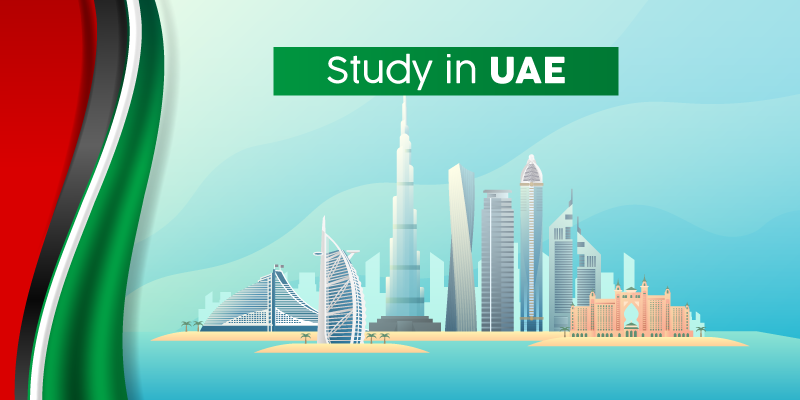
The United Arab Emirates has quietly become one of the most attractive higher-education destinations in the world. A decade ago, students looking abroad almost automatically thought of the UK, the US, or Australia. Today, a growing number of them are choosing the Emirates instead – and once you look at what the country offers, it is not hard to see why.
If you are weighing up your options, the decision to Study in UAE deserves a serious place on your shortlist. Below is a practical breakdown of what the experience actually looks like, from the universities themselves to visas, costs, and life after graduation.
Why the UAE has become a study magnet
The first thing most students notice is the sheer concentration of quality institutions in a small geographic area. Dubai alone hosts dozens of campuses, including international branch campuses of well-known British, American, and Australian universities. That means you can earn a degree accredited in another country without ever leaving the Gulf.
Beyond academics, the lifestyle is a genuine draw. The UAE is consistently ranked among the safest countries in the world, English is spoken almost everywhere, and the population is famously international – students often find themselves in classrooms with classmates from thirty or forty different nationalities. For anyone who wants a global experience without the culture shock of total isolation, it strikes a comfortable balance.
The academic landscape
When people talk about the Best Universities in UAE, they are usually referring to a mix of homegrown institutions and international branch campuses. Names like the American University of Sharjah, Khalifa University in Abu Dhabi, and the various Dubai-based campuses of British and Australian universities come up regularly in global rankings.
Programmes are taught in English, follow internationally recognised curricula, and increasingly emphasise employability. Business, engineering, computer science, hospitality, and medicine are among the most popular fields, partly because they map so directly onto the country’s fast-growing job market.
Tuition and living costs
It would be dishonest to pretend the UAE is the cheapest option on the table. Tuition at a reputable institution typically runs into the tens of thousands of dirhams per year, and Dubai in particular is not a budget city. That said, the figures often compare favourably with equivalent degrees in London or Sydney once you factor in living expenses and the absence of income tax on any part-time earnings.
Many universities offer merit-based scholarships, and shared student accommodation can bring monthly costs down considerably. The key is to budget honestly before you arrive rather than being surprised later.
Visas and admission
The admission process is refreshingly straightforward. Most undergraduate programmes ask for your completed secondary-school transcripts, and some require an English-proficiency test such as IELTS or TOEFL. Once you are accepted, the university itself usually sponsors your student visa, handles the paperwork, and guides you through the medical test and Emirates ID registration.
This sponsorship model is one of the underrated advantages of choosing the Emirates: instead of navigating a government bureaucracy on your own, you have an institution doing much of the heavy lifting for you.
Life after graduation
Perhaps the strongest argument is what happens after you finish. The UAE economy is diversifying rapidly, and sectors like technology, finance, logistics, tourism, and renewable energy are actively hiring graduates. Recent visa reforms have also made it easier for talented students to stay on and work after completing their studies, which removes one of the biggest anxieties that international students face elsewhere.
Resources such as Study From UAE exist precisely to help applicants navigate this landscape – comparing programmes, understanding entry requirements, and mapping out a realistic path from application to career.
Choosing where in the country to study
One thing many newcomers overlook is that the UAE is not a single uniform place. Each emirate has its own character, and where you base yourself shapes your daily life as much as your choice of course. Dubai is the fast-paced commercial heart, full of internship opportunities and international energy. Abu Dhabi, the capital, leans toward research, policy, and a slightly calmer pace. Sharjah has a long academic tradition and noticeably lower living costs, which makes it popular with budget-conscious students.
It is worth thinking honestly about which environment suits you before you apply. A student who thrives on a buzzing city may feel restless in a quieter emirate, while someone who wants to focus on their studies without distraction might prefer exactly that calm.
Planning your application timeline
The other common mistake is leaving everything to the last minute. Most universities run intakes in September and January, and the strongest applicants usually begin preparing six to nine months ahead. That window gives you time to sit any required English test, gather and attest your documents, apply for scholarships, and arrange accommodation without panic.
Building in this buffer also leaves room to compare offers properly rather than accepting the first one that arrives. A little forward planning at this stage saves a great deal of stress later.
Is it the right choice for you?
No single destination suits everyone, and the UAE is no exception. But if you want internationally recognised qualifications, a safe and cosmopolitan environment, and a real shot at building a career in one of the world’s most dynamic regions, the case is compelling.
The smartest move is to research thoroughly, speak to current students where you can, and use trusted guidance platforms before committing. If you do decide to Study in UAE, you will be joining a fast-growing community of students who concluded that the Emirates offered something the traditional destinations simply could not match.
