

Why Simplicity Often Produces Better Planning
Many people delay launching a business because they assume a business plan must be long, technical, and filled with projections that extend far beyond current knowledge. In reality, the most useful business plans in the early stage are often concise because they focus on decisions that affect immediate execution. A plan becomes effective when it helps the founder understand what will be sold, to whom, at what price, under which cost conditions, and through which operating method. Even in digital environments where attention shifts quickly from practical research to unrelated products such as jet x game apk, the same principle applies: clarity matters more than volume.
A simple business plan does not mean incomplete thinking. It means reducing planning to the essential components that directly influence whether the business can operate, adapt, and remain financially stable during the first stages.
The goal is not to predict every future outcome. The goal is to create a working framework that supports decisions under real conditions.
Start With the Core Business Definition
The first section of any business plan should answer one question clearly:
What exactly does the business do?
This answer must be specific.
For example:
- not “food business,” but “prepared lunches for office workers in one district”
- not “consulting,” but “bookkeeping support for small local retailers”
A broad definition weakens planning because later sections become unclear.
A precise business definition improves every other decision that follows.
Define the Problem the Business Solves
A business plan becomes practical when it explains why customers need the offer.
The strongest plans identify:
- what problem exists
- who experiences it
- how current alternatives fail or remain limited
This matters because demand is not created by describing the product alone. Demand usually begins when the product solves an existing inconvenience, delay, cost, or gap.
A founder who cannot explain the practical problem often struggles later with pricing and customer communication.
Identify the First Customer Group
A common weakness in business planning is describing customers too broadly.
A useful early plan defines the first customer group through practical filters:
- location
- routine
- spending behavior
- business type
- age or usage pattern
For example, “small firms needing invoice support” is stronger than “all businesses.”
A simple plan should describe who is most likely to buy first, not everyone who may buy later.
Explain How Revenue Will Be Generated
The business plan must show clearly how money enters the business.
This section should answer:
- What is sold?
- How often is it sold?
- Is payment one-time or recurring?
- Is pricing fixed or flexible?
A business without clear revenue logic often appears promising but remains difficult to evaluate.
Even simple businesses benefit from defining whether income depends on:
- individual transactions
- repeat contracts
- subscriptions
- commissions
Revenue structure shapes operational planning.
Build a Realistic Cost Overview
Many business plans fail because they focus heavily on income and underestimate costs.
A useful simple plan separates costs into two categories:
Fixed Costs
These remain constant regardless of sales volume:
- rent
- salaries
- software subscriptions
- basic utilities
Variable Costs
These rise with activity:
- packaging
- delivery
- materials
- transaction fees
This distinction matters because early business pressure usually comes from fixed costs.
A founder who understands which expenses continue during slow periods can make safer early decisions.
Describe the Operating Model
The operating section explains how the business actually functions day to day.
It should answer:
- How are orders received?
- How is delivery handled?
- Who performs the work?
- What happens if volume increases?
This section often reveals hidden weaknesses before launch.
A business may look attractive financially but fail operationally if execution depends on unstable assumptions.
Keep Financial Forecasts Practical
A simple business plan does not need large multi-year projections built on weak assumptions.
Instead, early forecasts should focus on:
- monthly minimum revenue required
- expected cost coverage point
- basic break-even estimate
A useful question is:
How many sales are needed each month to cover core costs?
This creates immediate planning value because it links activity directly to survival.
Include a Market Comparison Without Overcomplication
A business plan should acknowledge alternatives already present in the market.
This does not require long competitor analysis.
A practical version answers:
- What do customers use now?
- Why would they switch?
- What practical difference exists?
The purpose is not to describe every competitor, but to understand why the new business deserves market space.
Define the First Growth Step, Not the Entire Expansion Path
Many business plans become unrealistic when they describe distant expansion before first operations begin.
A stronger plan identifies one realistic next stage after launch.
Examples:
- first ten regular clients
- first repeat supplier agreement
- first second location only if current volume stabilizes
This keeps planning connected to evidence rather than ambition alone.
Identify Main Risks Early
A simple plan becomes stronger when risks are written clearly.
Typical early risks include:
- weak demand
- delayed payment
- supplier dependence
- founder overload
The purpose is not pessimism.
It is preparation.
A known risk is easier to manage than an ignored one.
Why Short Plans Often Work Better
Long plans often include assumptions that cannot yet be verified.
Short plans force prioritization.
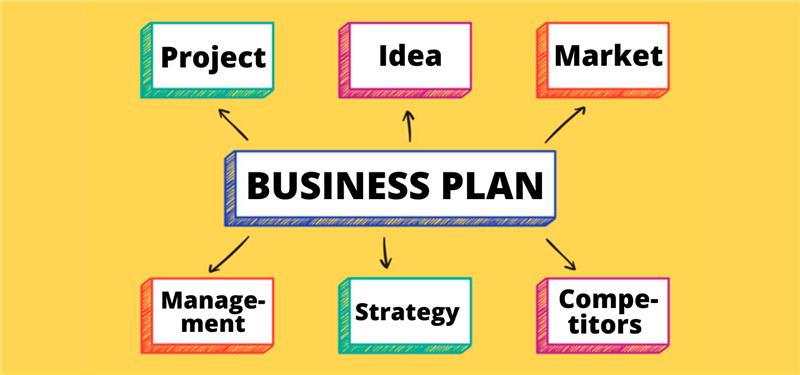
A useful business plan often fits within a structure where every section answers a practical operating question.
If a section does not help make a decision, it may not be necessary in the early stage.
Review and Adjust the Plan After Real Activity Begins
A business plan should not remain fixed after launch.
Once customer behavior becomes visible, parts of the plan often need adjustment:
- pricing
- customer definition
- cost estimates
- delivery assumptions
The strongest business plans are revised when evidence appears.
A Business Plan Is a Decision Tool, Not a Formal Document
Many founders treat planning as a presentation exercise.
In practice, the best business plan is one the founder can actively use when making choices.
It should help answer:
- Is spending justified?
- Is demand strong enough?
- Is growth realistic?
If the plan cannot guide decisions, it becomes only paperwork.
Conclusion
A simple but effective business plan focuses on practical clarity rather than length.
It defines the offer, customer, revenue logic, cost structure, operating method, and immediate risks in a form that supports action.
The strongest plans do not try to predict every future event. They provide enough structure for the founder to act with discipline while remaining flexible enough to adapt when the market begins to respond.
