

Concrete overlays are commonly used in construction and infrastructure rehabilitation to restore damaged surfaces, improve structural performance, and extend the service life of existing concrete structures. However, the success of an overlay depends on more than the quality of the new concrete mix. The condition and preparation of the existing surface play an equally important role in determining how effectively the new material bonds with the old concrete.
Poor surface preparation can lead to weak adhesion, delamination, cracking, and premature deterioration. For this reason, contractors need a concrete removal and preparation method that creates a suitable bonding surface while removing deteriorated material. Hydrodemolition offers an effective approach by using high-pressure water jets to remove weakened concrete and expose a clean, textured surface.
Unlike conventional mechanical removal methods, which rely on repeated physical impact, hydrodemolition uses pressurised water to break down and remove targeted concrete. When correctly applied, this process can help create surface conditions that support stronger bonding between existing concrete and new overlays.
Understanding how this technique works can help construction professionals make informed decisions when planning concrete rehabilitation and overlay installation projects.
Why Surface Preparation Matters for Concrete Overlays
A concrete overlay needs to form a reliable bond with the existing structure. If the original surface contains loose concrete, contaminants, laitance, or deteriorated material, the new layer may not adhere properly.
Surface preparation helps address these issues by removing unsuitable material and creating a profile that allows the overlay to establish mechanical interlock with the existing concrete.
Several factors influence overlay bonding:
- Surface cleanliness: Dust, oil, loose particles, and other contaminants can interfere with adhesion.
- Concrete condition: Weak or deteriorated material can create an unstable foundation for the new overlay.
- Surface texture: An appropriate texture can improve mechanical interlock between the old and new concrete.
- Moisture condition: The existing concrete needs to meet the moisture requirements of the selected overlay system.
- Removal depth: Unsound concrete must be removed without unnecessarily damaging the remaining structure.
If these conditions are not addressed properly, even a high-quality overlay material may experience bonding problems.
What Is Hydrodemolition of Concrete?
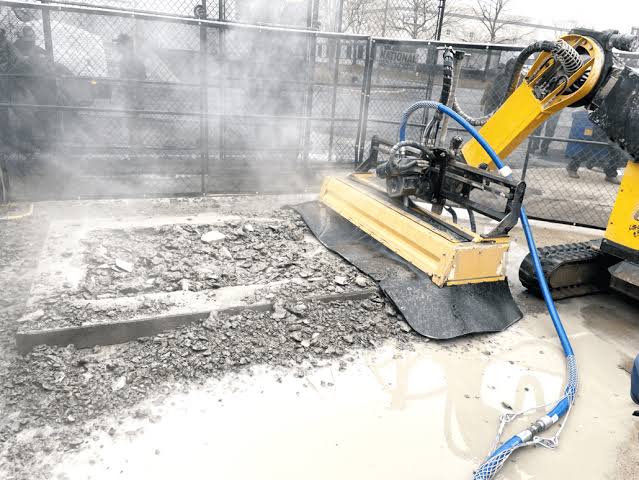
Hydrodemolition is a specialised concrete removal method that uses high-pressure or ultra-high-pressure water jets to break down and remove concrete. The process directs a concentrated stream of water towards the surface, allowing the water to penetrate existing pores and weaknesses within the material.
As the water interacts with the concrete, internal stresses and erosion contribute to the separation of weakened material. The equipment can be adjusted according to the required removal depth, concrete condition, and project specifications.
This method is widely used in concrete rehabilitation projects involving bridges, road surfaces, industrial structures, parking facilities, and other reinforced concrete elements.
One of its important applications is preparing existing concrete surfaces before installing new overlays. By removing deteriorated material and exposing a suitable substrate, the process can help establish the conditions required for effective bonding.
How Hydrodemolition Improves Bond Strength
1. Removes Deteriorated and Unsound Concrete
One of the most important requirements for successful overlay bonding is having a stable existing surface. Deteriorated concrete can contain cracks, weakened sections, and loose material that prevent the new layer from forming a reliable connection.
Hydrodemolition of concrete for stronger repair overlay bonding helps remove these compromised sections through controlled water-jet action. This allows contractors to expose sounder concrete beneath the damaged surface.
Removing weak material reduces the likelihood of the overlay bonding to an unstable layer that could separate under loading or environmental exposure.
2. Creates a Textured Surface for Mechanical Interlock
Surface texture is another important factor in concrete overlay performance. A completely smooth surface may provide less opportunity for mechanical interlock than a properly prepared, textured substrate.
Hydrodemolition can produce a rough and irregular concrete profile that allows fresh overlay material to engage with the existing surface.
This mechanical interaction helps improve the connection between the two concrete layers. However, the required surface profile depends on the overlay material, thickness, and project specifications.
3. Helps Preserve Existing Reinforcement
Reinforcing steel is an important component of many concrete structures. During rehabilitation, contractors often need to remove deteriorated concrete around reinforcement while retaining the existing steel where it remains suitable for reuse.
Traditional impact-based demolition can introduce vibration and may damage surrounding concrete or reinforcement if not carefully controlled.
Hydrodemolition avoids direct mechanical impact and can selectively remove concrete around reinforcing bars. This can help preserve suitable existing reinforcement and expose areas that require inspection or further treatment.
The condition of exposed reinforcement should still be assessed before overlay installation, particularly where corrosion or section loss is suspected.
4. Reduces Mechanical Damage to the Remaining Concrete
Mechanical demolition methods can create microcracking in the concrete that remains after removal. These cracks may affect the quality of the substrate and potentially weaken the interface between the existing structure and the new overlay.
Because hydrodemolition relies on water pressure rather than repeated mechanical blows, it can reduce impact-related damage to the remaining concrete.
The resulting substrate may provide a more suitable foundation for the overlay, provided the removal process is correctly controlled and the remaining surface is inspected.
5. Helps Remove Loose Particles and Surface Contamination
A reliable bond requires a surface that is free from loose material and contaminants that could interfere with adhesion.
Hydrodemolition removes concrete through water-jet action, helping dislodge weakened particles and some surface debris. However, it should not be treated as a substitute for all cleaning and preparation requirements.
After removal, the surface should be inspected and prepared according to the overlay manufacturer’s recommendations. Additional cleaning or preparation may be required to remove remaining debris and achieve the specified substrate condition.
The Role of Surface Profile in Overlay Bonding
The surface profile of existing concrete influences how effectively a new overlay can connect with the substrate. A suitable profile provides opportunities for mechanical interlock and helps the new material establish contact with the prepared surface.
Different overlay systems may require different surface textures. A thin bonded overlay, for example, may have different preparation requirements from a thicker structural concrete overlay.
Contractors should therefore follow the relevant engineering specifications and product guidelines rather than assuming that a rougher surface is always better.
The objective is to achieve a consistent and suitable profile without removing more sound concrete than necessary.
Hydrodemolition vs Traditional Concrete Removal Methods
Hydrodemolition and conventional mechanical demolition can both be used to prepare concrete for overlays. However, their methods and potential effects on the remaining substrate differ.
| Comparison | Hydrodemolition | Traditional Mechanical Removal |
|---|---|---|
| Removal method | High-pressure water jets | Mechanical impact and breaking |
| Surface texture | Can produce a textured substrate | May create fractured or uneven surfaces |
| Vibration | Generally lower impact-related vibration | Can generate significant vibration |
| Remaining concrete | Can help reduce mechanical impact damage | May introduce microcracking |
| Reinforcement exposure | Can selectively expose existing reinforcement | May create additional impact-related risks |
| Waste management | Requires collection and management of water and concrete slurry | Produces solid concrete debris and dust |
The appropriate method depends on the structure, concrete condition, removal requirements, and engineering specifications.
Important Steps Before Installing a New Concrete Overlay
Hydrodemolition is an important part of surface preparation, but successful overlay bonding also depends on the work completed after concrete removal.
1. Inspect the Prepared Surface
After hydrodemolition, inspect the exposed concrete to confirm that deteriorated material has been removed and the required surface profile has been achieved.
2. Check Existing Reinforcement
Where reinforcement is exposed, assess its condition and determine whether cleaning, corrosion treatment, or replacement is required according to the project specifications.
3. Complete Additional Cleaning
Remove remaining loose particles, debris, and contaminants. The prepared surface should meet the cleanliness requirements of the selected overlay system.
4. Manage Surface Moisture
Some cement-based overlay systems require a saturated surface-dry condition, while other repair products may have different moisture requirements. Follow the manufacturer’s instructions and project specifications.
5. Apply the Overlay Correctly
The overlay should be placed, compacted, and cured according to the approved installation procedure. Correct material selection and application are essential for achieving the intended bond performance.
Factors That Influence Concrete Overlay Bond Strength
Although hydrodemolition can create favourable surface conditions, the final bond strength depends on several additional factors:
- Concrete quality: The strength and condition of the existing substrate influence the overall connection.
- Surface preparation: The required profile and cleanliness must be achieved.
- Overlay material: The mix design and compatibility with the existing concrete are important.
- Application technique: Correct placement and compaction help minimise defects.
- Curing conditions: Appropriate curing supports the development of the overlay’s properties.
- Environmental conditions: Temperature, moisture, and weather can affect installation and curing.
- Quality control: Inspection and appropriate bond testing can help verify that project requirements have been met.
A properly planned rehabilitation process considers all these factors rather than relying on concrete removal alone.
Conclusion
The performance of a new concrete overlay depends heavily on the condition of the existing surface. Weak concrete, contamination, loose particles, and inadequate surface texture can all affect the connection between old and new materials. Effective preparation is therefore essential for achieving a durable repair.
Hydrodemolition provides a controlled approach to removing deteriorated concrete using high-pressure water jets. It can help expose sounder concrete, create a textured bonding surface, reduce mechanical impact damage, and selectively expose existing reinforcement. These characteristics make it a valuable method for many concrete rehabilitation and overlay preparation projects.
However, strong overlay bonding requires more than the removal process itself. The prepared surface must be inspected, cleaned, and brought to the moisture condition required by the selected repair system. Reinforcement condition, overlay compatibility, correct placement, and curing also play important roles in the final result.
By incorporating appropriate hydrodemolition techniques into a carefully planned repair process, contractors can establish suitable substrate conditions for new concrete overlays. The result can be a more reliable connection between existing and new concrete, supporting the long-term performance of repaired infrastructure and structures.