

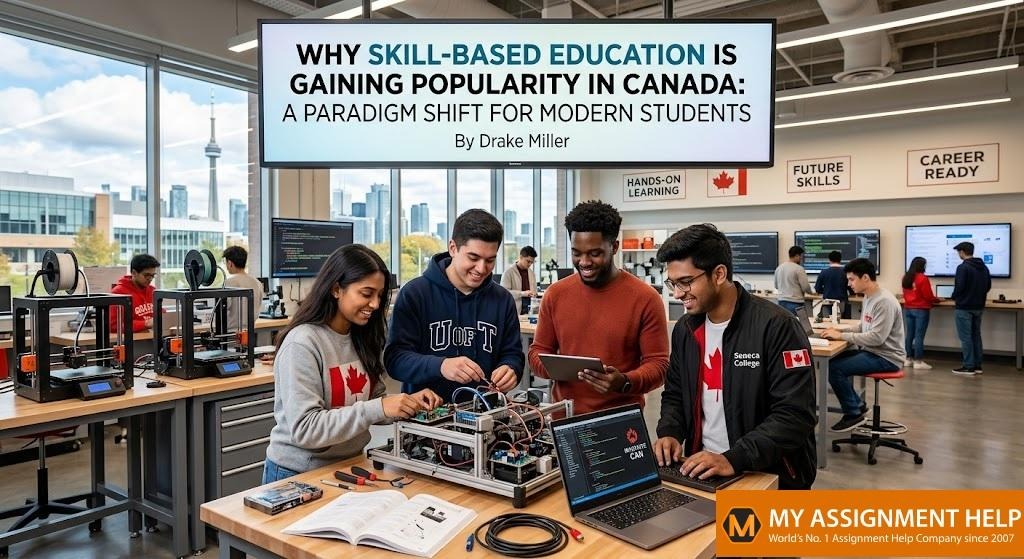
For decades, the standard roadmap for success in Canada was linear: finish high school with an Ontario Secondary School Diploma (OSSD), a BC Dogwood Diploma, or a provincial equivalent, attend a four-year university, and secure a professional career. However, the Canadian landscape is shifting. From the tech hubs of Toronto and Vancouver to the industrial sectors of Alberta and the Atlantic provinces, there is a growing realization that a traditional degree alone is no longer the guaranteed “golden ticket” it once was.
As the workforce evolves, high school students, international learners, and adult professionals are increasingly looking toward skill-based education. This model prioritizes the acquisition of specific, practical competencies—coding, healthcare assistance, sustainable architecture, or advanced manufacturing—over broad theoretical knowledge. It is a transition from “knowing about” a subject to “knowing how” to execute within a professional environment.
But why is this happening now? Let’s dive into the factors driving the popularity of skill-based education in Canada.
The Skills Gap in the Canadian Labor Market
Canada is currently experiencing a growing skills gap, where thousands of graduates enter the job market each year with general academic qualifications, yet employers continue to struggle in finding candidates equipped with practical, job-ready skills. According to the 2025–2026 Canadian Occupational Projection System (COPS), industries such as Information Technology, Construction, and Healthcare are in urgent need of professionals who can contribute from day one.
To address this challenge, skill-based education offered by colleges and polytechnic institutions is gaining momentum, as it focuses on hands-on training and real-world application. In specialized fields like healthcare, many students pursue accelerated learning pathways to meet industry demands more quickly. However, managing clinical responsibilities alongside academic requirements—such as detailed reports and technical documentation—can be overwhelming. As a result, some students seek nursing assignment help from Myassignmenthelp.com to better connect their practical experience with theoretical understanding.
This shift in education reflects a broader transformation in the workforce, where “agentic literacy”—the ability to apply knowledge effectively and adapt in real-world scenarios—is becoming far more valuable than traditional rote memorization.
Economic Pressure and Return on Investment (ROI)
The cost of living in Canada has skyrocketed. Consequently, students are becoming more pragmatic about their Return on Investment (ROI). Traditional university degrees often lead to significant debt and delay entry into the workforce. In contrast, skill-based programs are typically shorter and more affordable.
Navigating the rigorous technical writing and practical requirements of a Canadian polytechnic can be a heavy lift. For those balancing these intense transitions, academic help for Canadian students has become a vital resource. When the pressure of tight deadlines and complex modules becomes overwhelming, the immediate reaction for many is to find a reliable expert to do my homework so they can focus on hands-on training. Leveraging professional support ensures that the complex reporting styles required in fields like sustainable architecture or cybersecurity don’t hinder practical progress.
The Digital Transformation and the Tech Boom
Canada is a global leader in AI and cybersecurity. The tech industry moves faster than traditional university curricula can usually be updated. Private institutes and technical colleges can pivot their curriculum within months to reflect the latest cloud computing frameworks.
As Agentic AI begins to automate routine tasks, the focus has shifted toward the ability to manage AI agents to solve complex problems—a skill best learned through hands-on technical training. For a high school student, a targeted program in Data Analytics offers a more direct path to a career at companies like Shopify or Google Canada.
The “Earn While You Learn” Model: Co-ops and Apprenticeships
One of the greatest strengths of the Canadian system is Work-Integrated Learning (WIL). Many polytechnic programs include mandatory co-op terms, allowing students to gain hands-on experience and build a professional network while getting paid. For international students, these terms are often the primary gateway to securing a Post-Graduation Work Permit (PGWP) and eventual permanent residency.
Destigmatizing Red Seal Trades
In 2026, the narrative that university is the only path for “smart” students is officially dead. In Canada, the Red Seal Trades are recognized as high-paying, high-tech careers. Modern carpentry and automotive repair involve complex mathematics and advanced computer diagnostics. As the “Baby Boomer” generation retires, the Government of Canada Job Bank highlights a massive demand for skilled workers, leading to wages that often surpass entry-level office roles.
Personalization and Micro-credentials
Skill-based learning offers modularity through micro-credentials. These short, focused courses in Digital Marketing or Python programming allow for “stackable” learning. This caters to the “gig economy” mindset where professionals must constantly upskill to stay relevant. This approach often utilizes the Feynman Technique—learning by doing and teaching—rather than passive observation.
Navigating the Transition: High School to Career
For high school students in Canada, the pressure to choose a “forever career” at age 17 is intense. Skill-based education offers a lower-risk entry point. However, the curriculum is often rigorous and fast-paced, requiring students to master Deep Work habits and time-boxing. During these times, seeking external help—such as specialized tutoring or assignment assistance—is a common strategy for Canadian students to maintain their academic standing while mastering their craft.
Conclusion
The rise of skill-based education is empowering a new generation of Canadians. Whether you are a high school student or a professional looking to pivot, the message from the Canadian job market is clear: Skills are the new currency. For more insights into technical training, platforms like Skill Technical provide the roadmap you need. And remember, as you embark on this journey, you don’t have to do it alone. Utilizing modern resources to assist with technical writing can be the bridge that leads you to your dream career in the Great White North.
Frequently Asked Questions
Is a college diploma as good as a university degree in Canada?
In many technical and trade fields, a diploma is preferred because it guarantees hands-on experience. However, for research, medicine, or law, a degree remains the standard.
What are the highest-paying skilled trades in Canada?
Specialized electricians, industrial mechanics (millwrights), and plumbers currently see the highest entry-level wages, especially with a Red Seal certification.
Can I transfer college credits to a university later?
Yes, most provinces have “articulation agreements” allowing you to transfer credits from a diploma toward a full bachelor’s degree, often entering directly into the third year.
About the Author Drake Miller
I am a dedicated blog author and associated with Myassignmenthelp.com, committed to supporting students in their academic journey. Through my writing, I aim to simplify complex concepts, share practical insights and guide learners toward better understanding and performance. With a passion for education, I focus on delivering clear, engaging and helpful content that empowers students to achieve their goals with confidence and ease.
