

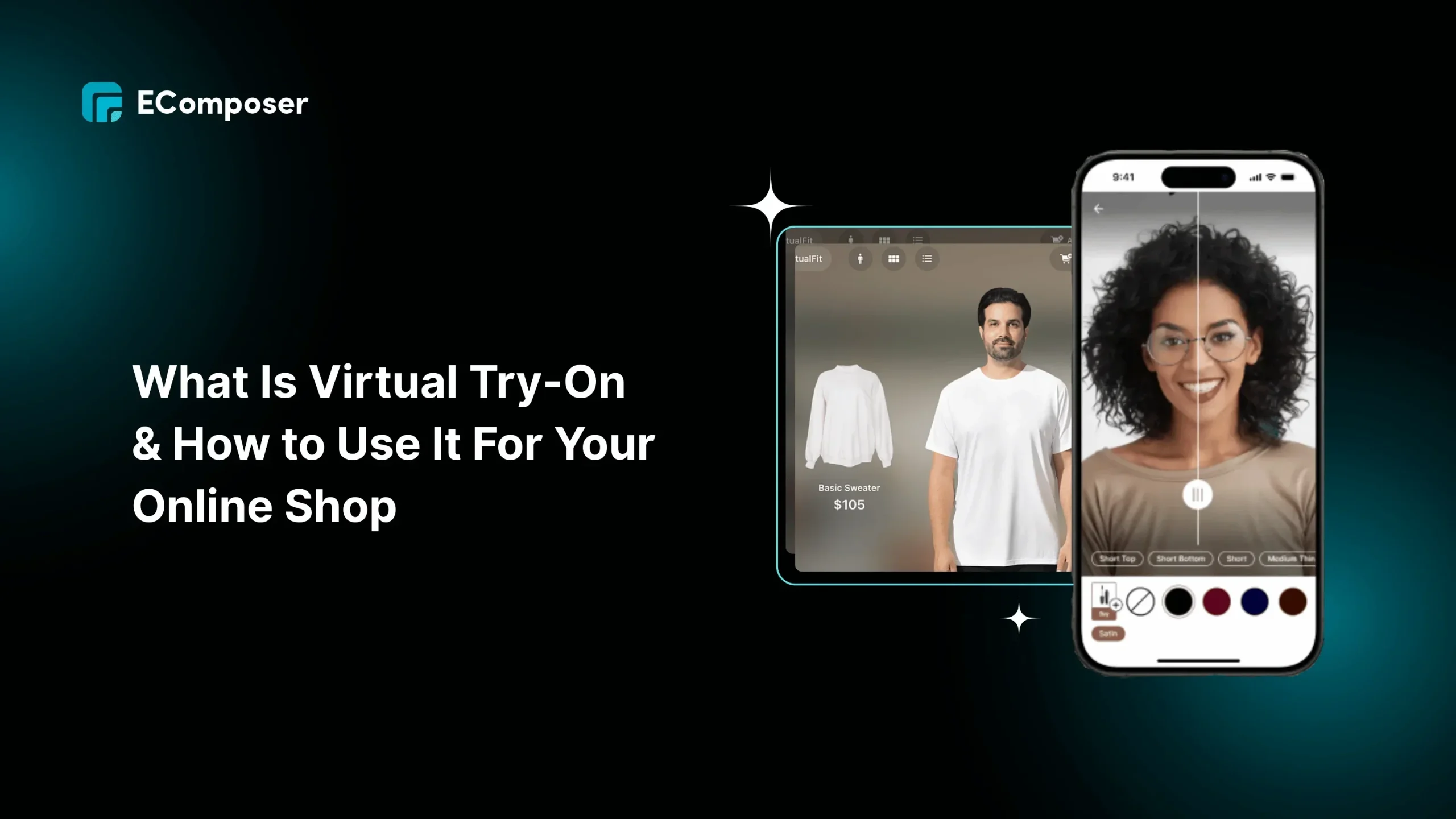
At SkillTechnical, we spend a lot of time thinking about which technologies are genuinely worth learning and which are hype. Virtual try-on is firmly in the first category. Powered by computer vision, generative AI, and a class of models that have gotten dramatically better in the last two years, virtual try-on is no longer a research demo — it’s a production feature used by millions of people.
This article breaks down how it works, what the technical challenges are, and why developers and tech learners should have at least a passing familiarity with the underlying stack.
The Core Technical Problem
Virtual try-on (VTON) has a deceptively hard core problem: you need to take an image of a person and an image of a garment and produce a realistic composite where the garment appears to be worn by that person — with correct draping, body-conforming fit, and lighting consistency.
Early approaches used simple image warping and manual keypoint annotation. They worked poorly on complex garments and broke down entirely when poses varied significantly from the training data. Modern approaches use generative models.
The Current State of the Art
Diffusion Models
The same class of models powering tools like Stable Diffusion and Midjourney have been fine-tuned for clothing try-on. Models like OOTDiffusion and CatVTON (both open-source) treat the problem as a conditioned image generation task: generate an image of this person, conditioned on this garment, while preserving their identity.
Human Parsing and Pose Estimation
Before any generation happens, the model needs to understand the scene. This involves semantic segmentation (which pixels are skin vs. clothing vs. background), human pose estimation (where are the joints), and body shape estimation. Libraries like OpenPose and SMPL are frequently used in the pipeline.
Garment Feature Extraction
The garment image needs to be processed separately to extract texture, shape, and structural features that can be transferred to the output. Attention mechanisms in transformer-based architectures are particularly good at preserving fine textile detail.
Consumer-Facing Implementations
You don’t need to build this from scratch to experiment with it. Well-designed consumer tools like PicsArt’s virtual try-on feature put the full pipeline behind a clean interface — useful if you want to understand the user experience side of the problem, test output quality, or show clients what’s possible.
For developers building in the e-commerce space, understanding what users now expect from try-on features (because they’ve used tools like this) is as important as understanding the technical implementation.
Why This Is a Skill Worth Developing
Fashion e-commerce is a massive industry with well-documented pain points around fit and returns. Any developer who understands generative AI, image processing, and the specific challenges of clothing try-on is well-positioned for a growing niche.
Beyond fashion, the underlying skills transfer directly to:
- Augmented reality applications (placing objects in real scenes)
- Product visualization tools for furniture, accessories, and cosmetics
- Medical and fitness applications that need realistic body-mesh manipulation
- Gaming and avatar customization systems
Getting Started
If you want to learn this stack, here’s a reasonable starting path:
- Understand diffusion models at a conceptual level — the Hugging Face Diffusers library is the best entry point.
- Get familiar with image segmentation and pose estimation using open-source tooling.
- Clone and run one of the open-source VTON models (OOTDiffusion is well-documented) on a GPU-enabled machine.
- Study the UX of polished consumer implementations like PicsArt’s virtual try-on tool for clothing to understand what good looks like from the user’s perspective.
- Build something small — even a simple garment swap pipeline — to solidify your understanding.
Final Thoughts
Virtual try-on sits at the intersection of generative AI, computer vision, and a real consumer problem worth solving. That’s a rare combination. Whether you’re a developer looking for a technical niche, a student exploring applied ML, or a tech professional trying to understand what’s coming in e-commerce, this is worth your time.
